Texas drivers use window tint to block heat and protect their privacy. Tinted windows can also reduce glare and shield the skin from UV rays. On hot roads, tint brings real comfort.
But Texas law does not allow all types of tint. The rules limit how dark each window can be. These limits help officers see inside the car. They also make sure drivers can see clearly at night.
The state uses a rule called Visible Light Transmission, or VLT. This shows how much light passes through the glass. A lower number means the tint is darker.
This guide explains Texas tint laws for 2026. It covers legal limits, banned colors, and medical rules. Read this before you tint your car or drive in Texas. You will avoid fines and stay within the law.
What Changed in Texas Tint Laws in 2026
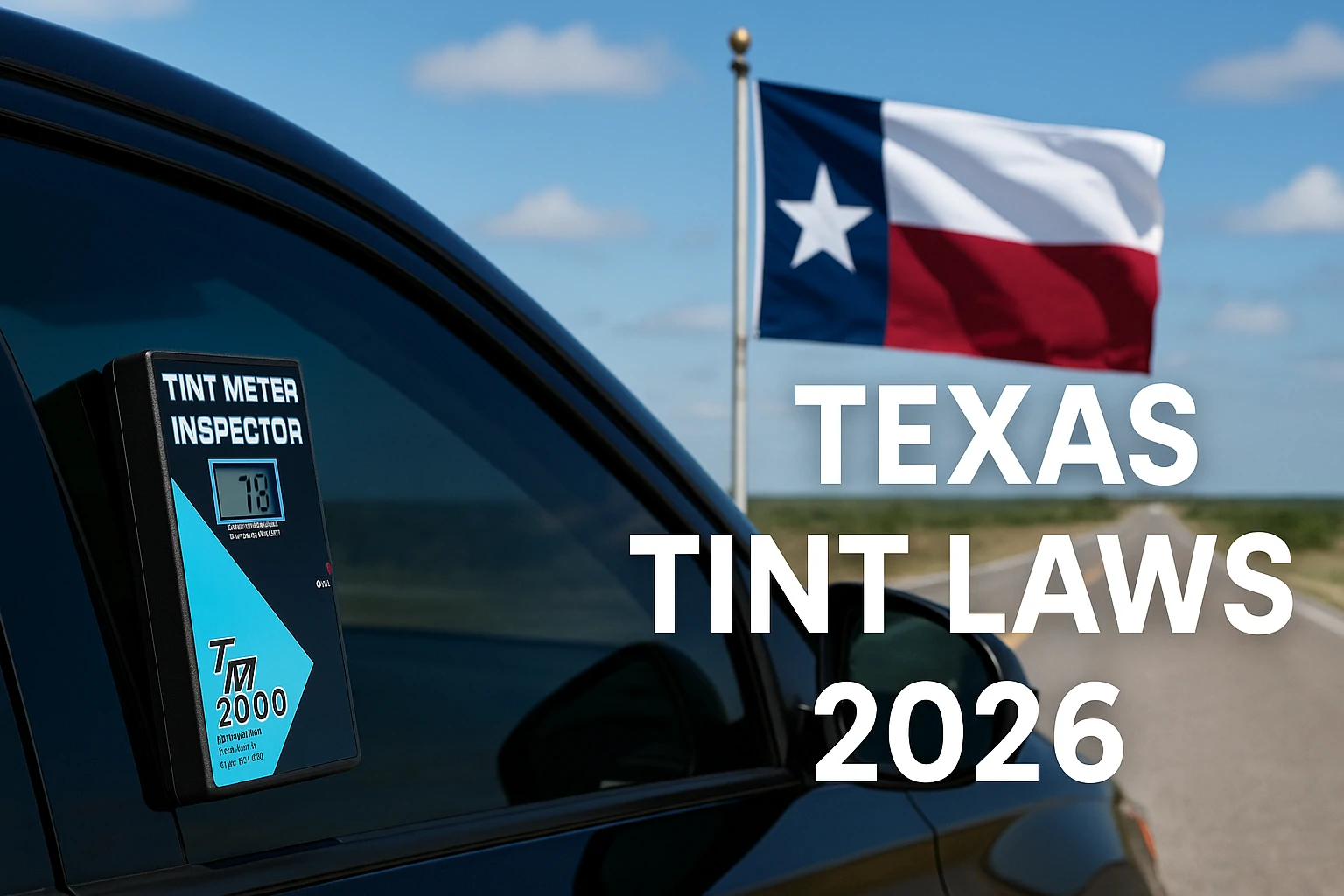
Texas did not overhaul tint laws in 2026, but enforcement became stricter. Police departments now rely more on digital tint meters during traffic stops.
Some counties also increased roadside checks near inspection stations. Officers now verify tint stickers more closely than before.
Drivers should not assume old tint will pass inspection. Even factory tint can fail if added film pushes it past legal limits.
This makes it important to test your tint before renewal or resale.
What Is VLT and Why It Matters
Texas tint law uses a rule called Visible Light Transmission, or VLT. This tells how much light passes through your window and the tint. A high number means more light comes in. A low number means the tint is darker.
If a window must have 25% VLT, it must let in at least 25% of visible light. You cannot use a film that blocks more than 75% of the light on that glass.
Each window on your car follows a different rule. The law sets separate VLT limits for front, back, and rear windows. You must follow the rule for each part.
Find the Best Attorney for Driving with a Suspended License
Legal Tint for Front Side Windows
In Texas, the front side windows must allow at least 25% VLT. This rule means the window should let in a quarter of the light. You can’t use darker films on these windows. If you break this rule, you may get a fine.
Also, the tint must not reflect more than 25% of light. Highly reflective films are not allowed. Some tint shops offer mirror-like tints. These are often illegal in Texas. Stick to non-reflective or lightly reflective films.
Legal Tint for Back Side Windows
Texas allows any level of tint on back side windows for most passenger vehicles. You can use darker tint or even full black-out film. Still, keep reflectivity under control. Reflective film cannot go beyond 25%.
For SUVs and vans, these back windows often come pre-tinted from the factory. You may still add more film, as long as it stays within state rules.
Legal Tint for Rear Window
Texas law allows dark tint on the rear window if your car has side mirrors on both sides. These mirrors must give a clear view behind the car.
If your car has no side mirrors, the rear window must let in at least 25% of visible light. A tint that blocks more than 75% would break the rule.
This law helps police see inside and keeps driving safe. Before you tint the rear window, check that both mirrors work and meet the law.
Windshield Tint Rules
Texas allows a strip of tint at the top of the front windshield. This is called the AS-1 line. The tint strip must not go below this line, which sits about 5 inches from the top of the windshield.
The tint must be non-reflective and must not block visibility. Full windshield tint is not allowed. Only factory-installed sun filters or clear UV films are legal. Anything darker will break the law and lead to fines.
Are Clear UV and Ceramic Tints Legal in Texas?
Clear UV and ceramic tints are legal in Texas if they meet VLT rules. These films block heat and UV rays without darkening the glass.
Many drivers choose ceramic tint for comfort and skin protection. It works well in Texas heat and stays within the law.
Always ask the installer for the VLT rating after installation. Even clear films can fail if stacked over factory tint.
Reflectivity Rules
Texas also limits how reflective your tint can be. Reflective tint can cause glare and blind other drivers. It may also stop law enforcement from seeing inside your vehicle.
Both front and back side windows must not reflect more than 25% of light. This rule applies to all cars, no matter the window’s size or shape. Avoid mirror-style or metallic films unless they meet this reflectivity limit.
Color Restrictions
Texas does not allow red, blue, or amber tint on any car windows. These colors may look like lights used on police or emergency vehicles.
Stick to basic colors such as gray, black, or green. These shades are safe and legal.
Some tint shops may offer bright colors to change your car’s look. Ask before you buy. If the color breaks state law, you could face a fine or a traffic stop.
Medical Exemptions
Some drivers have health conditions that require extra sun protection. Texas allows medical tint exemptions in such cases. The driver must carry a signed letter or prescription from a licensed doctor or optometrist.
With an exemption, you may install darker tint on front windows or even the windshield. Still, you must keep the medical proof inside the car. If stopped, you must show this to the officer.
Apply for the exemption through the Texas Department of Public Safety (DPS). Your paperwork must match your vehicle’s license plate and registration.
How to Apply for a Medical Tint Exemption in Texas
Drivers with medical needs must apply through the Texas Department of Public Safety.
Steps to Follow
- Get a signed letter from a licensed doctor or optometrist
- Make sure it lists the medical reason clearly
- Submit the form to DPS with your vehicle details
- Keep a copy inside your vehicle at all times
Medical tint does not remove all limits. Law enforcement may still check your paperwork during a stop.
Tint Sticker Requirement
Texas law also asks for a sticker on each tinted window. This sticker must be placed between the tint film and the glass. It shows that the tint meets state standards.
The installer should provide this sticker after completing the job. If your tint has no sticker, police may question its legality-even if it follows the rules.
Never remove these stickers unless you remove the tint. They serve as proof that your vehicle is in compliance.
Will Illegal Tint Fail Texas Vehicle Inspection?
Yes. Illegal tint can cause an inspection failure. Inspectors test front windows and check for missing stickers.
If your tint fails, you must remove or replace it before renewal. Driving with failed inspection can lead to tickets and delays.
Always confirm tint legality before inspection season.
Penalties for Illegal Tint
If your window tint breaks Texas law, you may face:
- A fine of up to $200
- A fix-it ticket that requires you to remove or replace the tint
- Trouble during vehicle inspection or renewal
Repeat offenses can lead to higher fines and even license points. The best way to avoid trouble is to check the VLT rating before applying new film. Ask the tint shop for a certificate of compliance.
Texas Tint Laws vs Other States
Texas allows darker rear window tint than many states. Some states require higher VLT across all windows.
Drivers who travel should check local rules. A tint legal in Texas may be illegal in California or New York.
This matters most for road trips and relocation.
Final Thoughts
Texas tint laws aim to protect both drivers and the public. They allow comfort from sun and heat but still keep your car safe and legal.
Each window has a limit. The rules are clear and easy to follow. Do not use films that block too much light or reflect like a mirror.
Before you tint your car, speak with a licensed installer. They will know what meets Texas law. Ask for proof that the film is legal.
If you need extra tint for medical reasons, get a note from your doctor. Keep that note with you in the car at all times.
Stay legal. Stay safe. Drive smart in Texas.
If you plan to drive outside Texas, check other state rules as well. Here’s a guide on the legal tint laws in Florida to help you stay safe on the road.
This article is for general information only. It does not provide legal advice. Speak with a licensed Texas attorney for help with your specific case.